
Introduction
MIM manufacturing is not the kind of process that draws attention to itself. It operates quietly, deep within supply chains, producing components that end up inside surgical instruments, aerospace assemblies, and consumer electronics without ever announcing their origins. And yet the process itself, metal injection moulding, represents one of the more significant developments in precision manufacturing of the past half century. It combines the geometric flexibility of plastic injection moulding, the material integrity of wrought metal, and the economics of high-volume production into a single coherent system. Its adoption across industries where failure carries serious consequences reflects a careful, accumulated body of evidence about what the process can reliably deliver.
What MIM Manufacturing Is and Where It Came From
MIM manufacturing, or metal injection moulding, took shape as a commercial process in the 1970s. Its origins lay in a straightforward industrial insight: the binder systems used to carry ceramic powders through injection moulding equipment could, in principle, do the same for metal powders. Remove the binder afterwards, sinter the remaining powder at high temperature, and the result would be a fully dense metal component shaped with the precision of a moulded part.
The gap between that insight and a reliable industrial process was considerable. Feedstock chemistry, debinding technology, and furnace process control each required years of development before mim manufacturing could perform consistently enough to serve regulated industries. What emerged was a mature process backed by standardised materials, well-characterised process parameters, and a global supply base. Its growth has been steady rather than dramatic, driven by the expanding population of components whose combination of geometric complexity, material requirements, and production volume makes metal injection moulding the most defensible technical and economic choice available.
The MIM Manufacturing Process: Stage by Stage
Feedstock Preparation
Every MIM manufacturing programme begins with feedstock: a carefully engineered mixture of fine metal powder and an organic binder system. Powder particle size, typically below 20 micrometres, is selected to support the sintering behaviour and final mechanical properties the application demands. The range of alloys processed through MIM manufacturing is broad, encompassing stainless steels, low-alloy steels, titanium alloys, cobalt-chrome formulations, and tungsten-based materials.
Injection Moulding
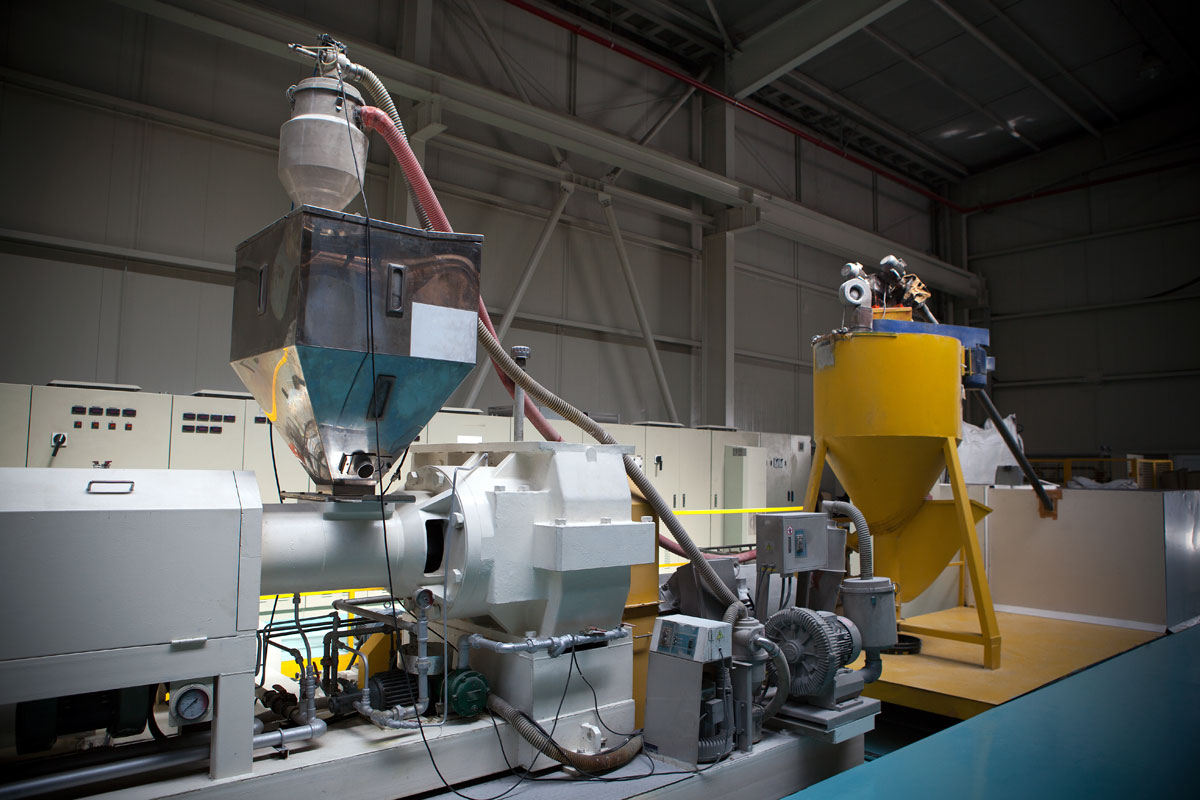
The feedstock is processed on machinery that closely resembles standard plastic injection moulding equipment, modified to handle the greater density and abrasive nature of metal-loaded material. What emerges after cooling is a green part: dimensionally accurate to the mould geometry but larger than the intended finished component by the full extent of anticipated sintering shrinkage.
Tooling design for MIM manufacturing must account for that shrinkage, which typically runs between 15 and 20 percent in linear dimensions. Gate location, parting line placement, and ejection system design carry the same importance here as in any injection moulding process, with the added requirement that every tooling decision be made with the sintered final geometry as the reference.
Debinding
Debinding removes the organic binder from the green part, producing the brown part: a porous, fragile structure of metal powder. The debinding route is determined by the binder system in use. Thermal debinding relies on a controlled heating schedule to volatilise the binder. Solvent debinding dissolves the primary binder component through immersion. Catalytic debinding converts the binder to gaseous byproducts through exposure to a catalytic atmosphere at comparatively low temperatures.
Sintering
Sintering is the stage at which MIM manufacturing makes its most consequential commitment. The brown part is heated in a controlled atmosphere furnace to temperatures approaching the melting point of the alloy, typically between 1,200 and 1,450 degrees Celsius. Metal particles bond, porosity collapses, and the component densifies to between 96 and 99 percent of theoretical density. The mechanical properties achieved are comparable to wrought or cast equivalents, separating metal injection moulding from conventional powder metallurgy pressing and justifying its use in structurally demanding applications.
Design for MIM Manufacturing
The record of MIM manufacturing programmes that have encountered difficulty is, in a significant proportion of cases, a record of design decisions made without adequate understanding of the process. Wall thickness uniformity, draft angles, and the management of internal corners are constitutive of a design that the process can actually execute.
Features that would require secondary machining in competing processes, among them cross-holes, undercuts, external threads, and knurled surfaces, can in many cases be incorporated directly into the mould geometry. Singapore’s MIM manufacturing sector has built demonstrable strength in design-for-manufacture capability, particularly for medical device and precision electronics programmes where geometric complexity and regulatory compliance must be achieved within the same validated production system.
Scaling to High-Volume Production
Moving from process development into high-volume MIM manufacturing requires documented qualification of the injection, debinding, and sintering stages. Once that qualification is in place, the economics become compelling. Tooling costs are distributed across large production quantities, material utilisation is high, and secondary operations are reduced. For components in the one gram to one hundred gram range with production volumes in the hundreds of thousands, metal injection moulding consistently outperforms machining, casting, and conventional powder metallurgy on total programme cost.
Conclusion
Traced from feedstock preparation through to sintered components at production scale, MIM manufacturing is a process whose performance is the product of disciplined engineering across multiple technical domains. Powder metallurgy, polymer science, furnace technology, and tooling design each contribute to the outcome. For engineers and programme managers who engage with those requirements seriously from the design stage onwards, MIM manufacturing offers a proven and economically sound route to high-performance metal components that no alternative process can replicate on comparable terms.
