
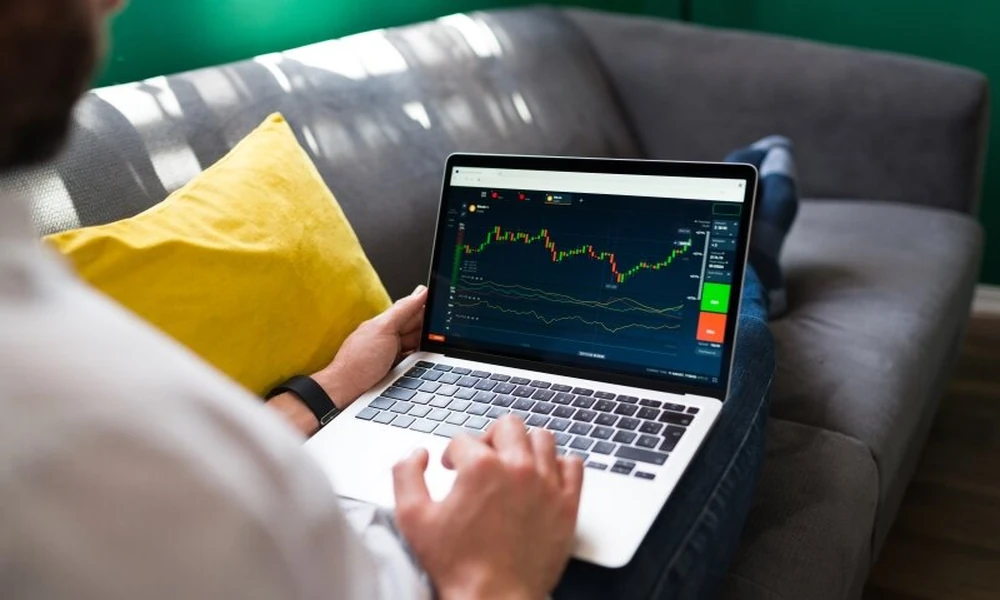
The ETF market gives investors access to exchange-traded funds that can track indices, sectors, commodities, bonds or other defined market themes. ETFs combine characteristics of pooled investment funds with exchange-based trading, which makes them different from many traditional mutual fund products.
For investors, the main attraction is diversification with market access. Instead of buying each security individually, an ETF can provide exposure to a basket of assets through a single instrument. However, investors should still understand liquidity, tracking quality, costs and market risk before investing.
How the ETF Market Works
ETFs are bought and sold on stock exchanges during market hours.
Their prices can move throughout the day based on demand, supply and the value of the underlying assets.
This means investors may see a market price that differs slightly from the ETF’s underlying net asset value.
The difference may be small in highly liquid products but can become more noticeable in less actively traded ETFs.
ETFs Can Track Different Market Segments
The ETF market includes products built around different investment ideas.
These may include:
- Broad market indices
- Large-cap or mid-cap indices
- Sector-specific indices
- International markets
- Gold and other commodities
- Bond indices
- Factor-based strategies
- Other thematic benchmarks
Investors should understand what the ETF tracks before deciding whether it fits the portfolio.
Diversification Is One of the Main Benefits
An ETF may hold several securities within one instrument.
For example, an index ETF can provide exposure to multiple companies instead of requiring the investor to buy each stock separately.
This can reduce company-specific concentration risk.
However, diversification does not mean the investment cannot lose value. If the overall market or sector declines, the ETF may decline as well.
Liquidity Can Influence the Trading Experience
Liquidity is an important factor in the ETF market.
A highly traded ETF may have a narrower difference between the buying and selling price, while a less liquid ETF may have a wider bid-ask spread.
A wider spread can increase the effective cost of entering or exiting an investment.
Investors should therefore consider:
- Trading volume
- Bid-ask spread
- Market depth
- Fund size
- Underlying asset liquidity
These factors can influence transaction efficiency.
Tracking Difference Matters
Most ETFs aim to follow a specific benchmark.
However, the ETF may not deliver exactly the same return as the underlying index.
The difference can arise because of:
- Expense ratios
- Cash holdings
- Portfolio adjustments
- Trading costs
- Operational factors
Investors may compare tracking consistency when choosing between ETFs following similar benchmarks.
Expense Ratios Still Affect Returns
ETFs generally charge an annual expense ratio.
The amount may appear relatively small, but costs can influence long-term performance.
When comparing ETFs, investors should look at the expense ratio alongside liquidity, tracking quality and portfolio composition.
Choosing an ETF only because it has the lowest expense ratio may overlook other important factors.
A Demat Account App Can Support ETF Access
Investors may use a Demat Account App to hold eligible ETF units electronically and manage other securities within the same investment account. Because ETFs trade on exchanges, they are generally purchased and sold through a trading interface while the holdings are maintained electronically.
The app can make monitoring easier, but users should still understand the ETF before placing an order.
Technology simplifies access, not investment risk.
Order Type Can Affect ETF Execution
Since ETFs trade during market hours, investors may need to choose an order type.
Market Order
A market order generally prioritises execution at the available market price.
Limit Order
A limit order allows the investor to specify a preferred price condition.
For ETFs with lower liquidity, limit orders may provide more control over execution price.
Investors should understand the behaviour of each order type before trading.
ETFs Can Play Different Roles in a Portfolio
An ETF can be used for different objectives depending on the underlying exposure.
For example:
- Broad-market ETFs can support core equity exposure.
- Sector ETFs can provide targeted exposure.
- Bond ETFs may support fixed-income allocation.
- Gold ETFs may provide commodity exposure.
- International ETFs may add geographic diversification.
The appropriate mix depends on the investor’s goals and risk tolerance.
Broad ETFs and Sector ETFs Are Not the Same
A broad-market ETF may hold companies across several industries.
A sector ETF concentrates on a specific area such as banking, technology or healthcare.
Sector ETFs can offer targeted exposure but may carry greater concentration risk.
Investors should understand whether they are seeking broad diversification or a specific market theme.
ETF SIPs Need a Different Approach
Some investors may want to invest in ETFs regularly.
Unlike a traditional mutual fund SIP, ETF purchases are generally executed on the exchange at prevailing market prices.
This means investors may need to consider:
- Unit price
- Brokerage
- Bid-ask spreads
- Transaction timing
- Liquidity
A regular investing approach can still be used, but the execution process may differ from an automated mutual fund SIP.
Avoid Building a Portfolio With Overlapping ETFs
Holding multiple ETFs does not necessarily mean the portfolio is more diversified.
Two ETFs may contain many of the same stocks.
For example, a broad-market ETF and a large-cap ETF can have substantial overlap.
Investors should review underlying holdings before adding another ETF.
The goal should be to add meaningful exposure rather than duplicate what is already present.
Review the Underlying Index
An ETF is only as relevant as the exposure it provides.
Before investing, users should examine:
- Index methodology
- Number of securities
- Sector allocation
- Top holdings
- Rebalancing rules
- Concentration levels
Understanding the index can help investors know what actually drives ETF performance.
Do Not Chase Themes Only Because They Are Popular
The ETF market often introduces products around popular sectors or investment themes.
A strong recent performance trend can attract investors, but popularity alone is not an investment strategy.
Before investing in a thematic ETF, users should consider:
- Whether the theme fits their portfolio
- How concentrated the ETF is
- Whether valuations are elevated
- How volatile the underlying sector can be
- Whether the investment horizon is long enough
This can help reduce decisions based only on recent momentum.
ETF Market Prices Can Move Away From NAV
The market price of an ETF may occasionally trade at a premium or discount to its underlying value.
This can happen because of supply, demand or liquidity conditions.
Highly liquid ETFs may generally stay closer to their underlying value, while less liquid products can show larger differences.
Investors should consider both market price and underlying value when evaluating execution.
Long-Term Investors Should Review Allocation
ETFs can be used as long-term holdings, but they should still be reviewed periodically.
A portfolio review may consider:
- Whether asset allocation has changed
- Whether one ETF has become too large
- Whether overlap has increased
- Whether the original investment goal remains relevant
- Whether fees and tracking remain reasonable
This helps keep the portfolio aligned with the investor’s original strategy.
Taxes and Transaction Costs Need Attention
ETF transactions may involve brokerage, statutory charges and tax implications.
The exact treatment can differ depending on the ETF category and current tax rules.
Investors should review the latest applicable rules before estimating post-tax returns.
Ignoring these costs can make performance comparisons less accurate.
Conclusion
The ETF market can provide investors with a flexible way to access diversified market exposure through exchange-traded products. However, investors should evaluate liquidity, tracking quality, cost, concentration and the underlying benchmark before choosing an ETF.
A reliable Demat App can make it easier to hold ETF units, monitor investments and manage eligible market transactions. The most effective approach is to use ETFs as part of a clear asset-allocation strategy rather than selecting them only because a particular theme is currently popular.
FAQs
What Is the ETF Market?
The ETF market is the exchange-based marketplace where investors buy and sell exchange-traded funds.
Are ETFs the Same as Mutual Funds?
No, ETFs trade on exchanges during market hours, while traditional mutual funds are generally transacted at the applicable NAV.
Can ETFs Be Held in a Demat Account?
Yes, eligible ETF units can generally be held electronically in a Demat account.
Are ETFs Risk-Free?
No, ETF prices can rise or fall depending on the performance of the underlying assets and market conditions.
What Should I Check Before Investing in an ETF?
Review the underlying benchmark, liquidity, tracking quality, expense ratio, concentration and fit within your portfolio.
