
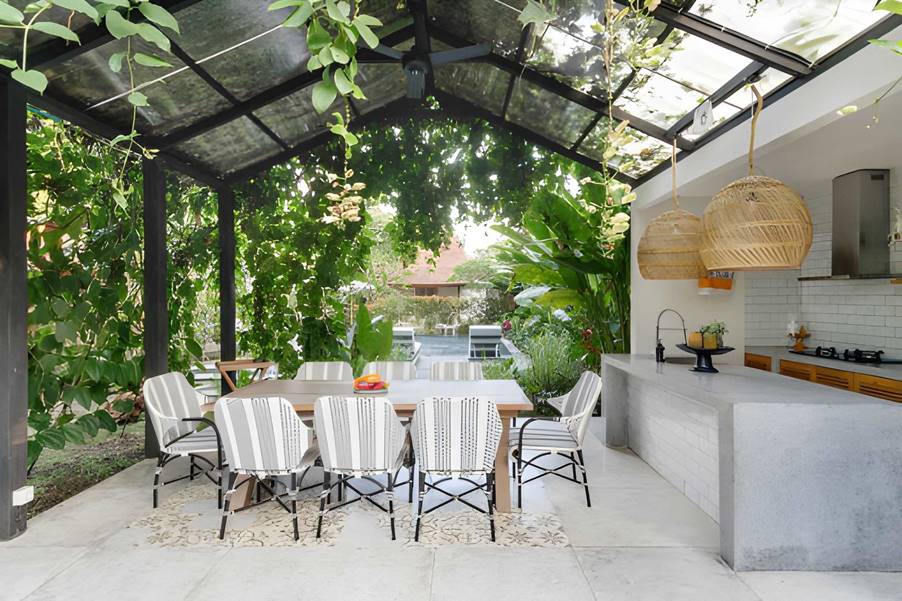
An outdoor kitchen sounds like fun when one plans it. You visualize sizzling food, lazy evenings, perhaps you are with friends. Then the reality comes in: a small patio area that does not fit the corners, and the abrupt realisation that you cannot simply do everything you wish. It is then that intelligent planning becomes the game-changer.
Even a small outdoor kitchen can feel spacious when designed to feel that way. It is not really a question of size but rather of efficiency: how to make the most of each inch without cramming or cluttering space.
As people begin to consider more disciplined layouts of smaller areas, lots consider the installation of a Kamado Joe outdoor kitchen setup, usually via best distributors such as BBQs2u, who clarify on their webpage about modular units compatible with kamado-style grills. The way in which this arrangement can be accommodated in special cabinets is especially helpful in such compact spaces.
The grill is not placed clumsily on a cart or requires more clearance space. Rather, it is incorporated into an efficient plan that ensures the efficient circulation of air while maintaining a small size.
Practically speaking, this type of built-in system also reduces visual clutter. Since the grill will be assembled in a safe area, counter space can be planned efficiently, avoiding the need to improvise with unique tables or stands. With time, that system will make cooking easier, and the general area will be cleaner.
Start With a Simple Layout Sketch
Map your space before making any purchases. It does not have to be flawless; it only has to be clear enough to visualize movement.
Things to consider:
- Entry and walking pathways
- Distance between cooking and seating areas
- Access to utilities like gas or electricity
- Safe clearance around heat zones
Skipping this step often leads to cramped layouts that feel uncomfortable during actual use.
Choose Features That Do Double Duty
In smaller kitchens, multi-functional elements are incredibly valuable. They help you avoid overcrowding without sacrificing usability.
Space-saving ideas include:
- Prep counters that double as serving areas
- Storage drawers built beneath work surfaces
- Foldable side shelves for occasional use
- Built-in cabinets instead of freestanding units
The goal is to make each feature earn its place.
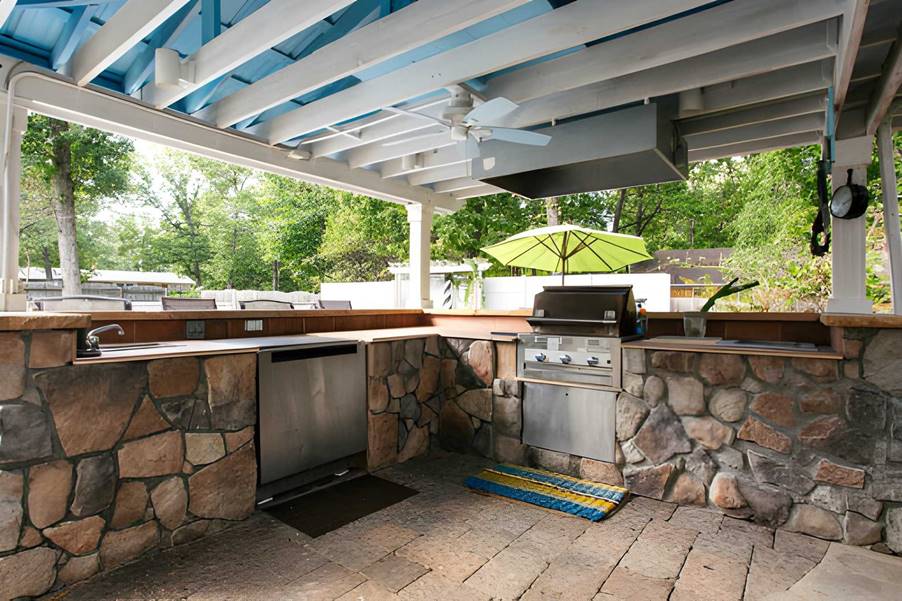
Think Vertically, Not Just Horizontally
When floor space runs out, vertical solutions can make a huge difference.
Consider adding:
- Wall-mounted racks for utensils
- Open shelves above prep zones
- Hanging storage for frequently used tools
- Integrated lighting within overhead structures
Using height creatively keeps surfaces clear and functional.
Be Selective with Appliances
It is tempting to include everything: fridges, side burners, sinks, pizza ovens. But in compact spaces, restraint usually works better.
Ask yourself:
- Which appliances will I use regularly?
- Can one feature serve multiple purposes?
- Will this item justify the space it occupies?
A focused setup often feels more comfortable than a crowded one.
Final Thoughts
Saving space in an outdoor kitchen is not about limiting possibilities. It is about designing smarter. With a clear layout, multi-purpose features, and integrated grill systems, even small patios can feel open and efficient. And honestly, when everything fits just right, cooking outdoors becomes not only easier, but oddly satisfying too.
Top of Form
